

Stormwater Systems That Work With Natural Processes
Bioponds in Middle Tennessee area for properties managing stormwater runoff from parking lots and rooftops
Stormwater runoff from paved surfaces creates flooding, erosion, and water quality problems when it flows directly into drainage systems without treatment. J Industries TN builds and maintains bioponds—engineered depressions filled with native plantings, specialized soil mixes, and landscape material strategically positioned to collect and treat runoff before it reaches conveyance systems. These bioretention basins serve commercial properties, residential developments, and any site where impervious surfaces generate concentrated stormwater flow.
A biopond functions as a living filtration system where runoff enters the depression and infiltrates through an engineered soil layer composed of sand, fines, and organic matter. Native plantings within the basin perform evapotranspiration, pulling water upward through roots and releasing it as vapor while the soil filters pollutants and sediment. Excess water from ordinary storms soaks into surrounding soils or flows through underdrains to the stormwater system, while overflow structures safely discharge water during large storm events without overwhelming the basin.
Schedule an on-site evaluation to determine the appropriate bioretention basin configuration for your property's drainage patterns..
What Proper Bioretention Basin Design Requires
The effectiveness of a biopond depends entirely on the engineered soil mix and strategic placement relative to runoff sources. The soil layer must balance infiltration capacity with nutrient retention—too much sand creates rapid drainage that bypasses biological treatment, while excessive fines slow infiltration and cause ponding. Native plant selection matters because root structures create channels for water movement and different species tolerate varying inundation periods, from constant moisture at the basin bottom to occasional saturation near the edges.
Once the system is operational, you notice stormwater no longer rushes directly into storm drains or creates sheet flow across your property. Water pools briefly in the basin after rain events, then gradually disappears as infiltration and evapotranspiration occur. Sediment and debris collect on the surface rather than washing into downstream systems, and the planted areas remain visibly healthy rather than showing signs of drowning or desiccation that indicate soil mix or grading problems.
Metro Nashville requires property owners to maintain stormwater control measures according to specifications filed with property deeds and available through the Register of Deeds. Maintenance includes removing accumulated sediment, replacing mulch, clearing overflow structures, and ensuring plantings remain established. Neglected bioretention basins lose infiltration capacity as the engineered soil becomes clogged, turning the feature into a standing water problem rather than a functional treatment system..
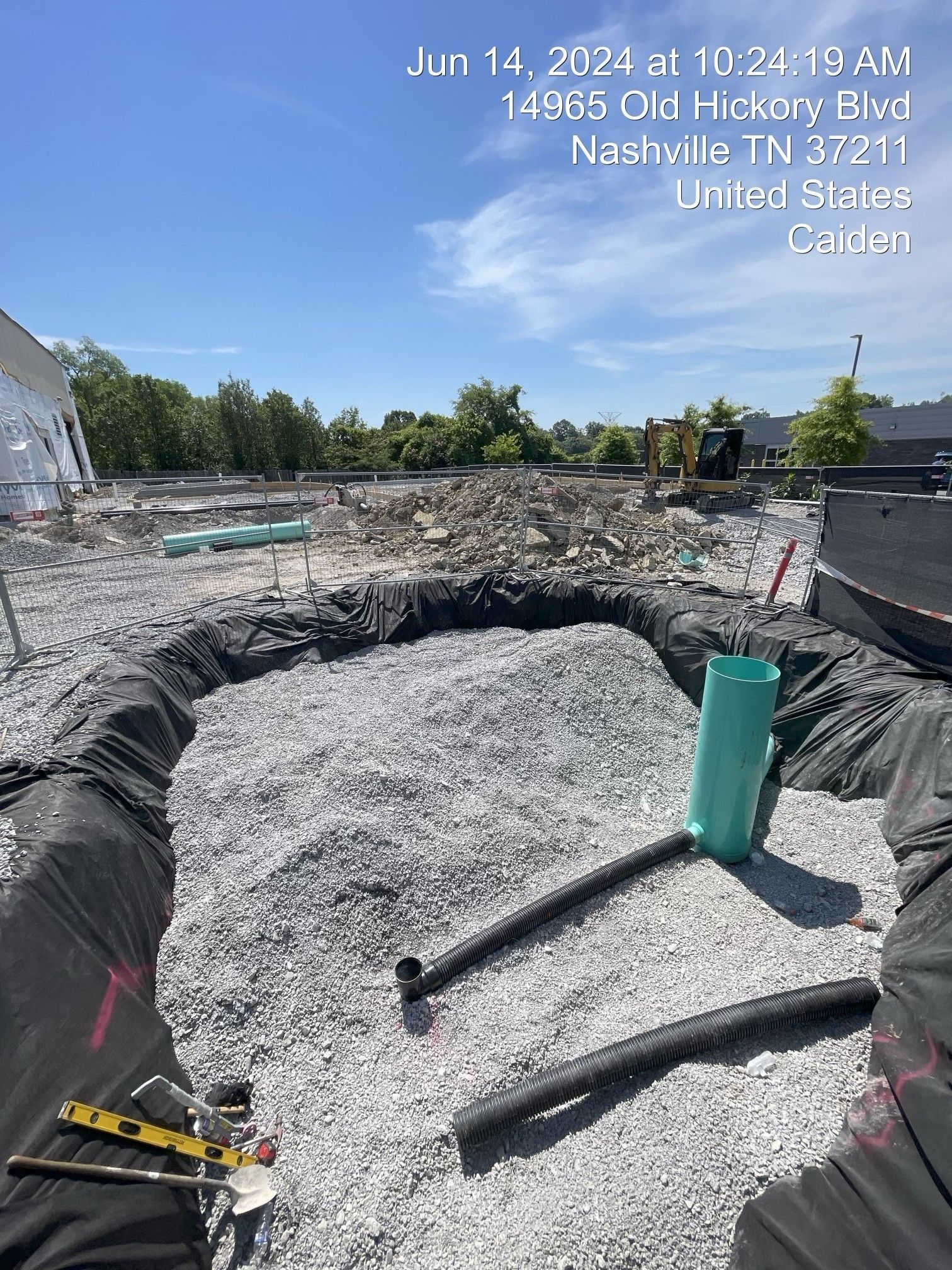
Types of Bioponds:
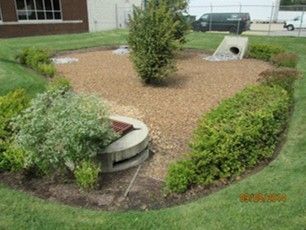
Large Commercial Basin
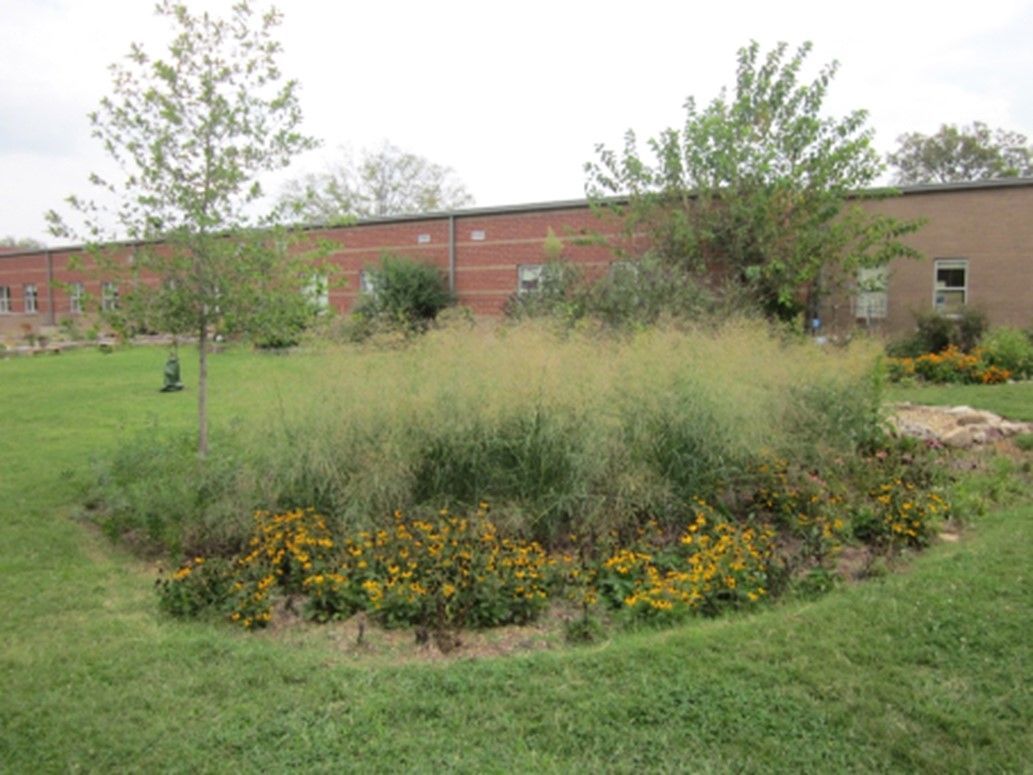
Small Rain Garden
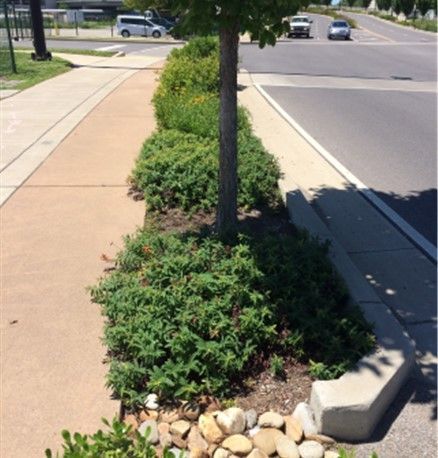
Streetscapes
Questions Before Starting Your Project
Property owners in Middle Tennessee area often need clarification about how bioretention basins function and what ongoing responsibilities they create, particularly regarding the maintenance requirements filed with property deeds.
How does a biopond differ from a decorative pond?
A biopond is a shallow depression engineered for infiltration and treatment rather than water storage. It remains dry most of the time and only holds water temporarily after rain events, unlike ornamental ponds designed to maintain standing water. The engineered soil mix and underdrain system allow water to move through the basin within hours or days depending on storm size.
What happens during large storm events that exceed the basin's capacity?
The overflow structure directs excess water safely out of the basin and into the stormwater conveyance system once the engineered soil becomes saturated. This prevents flooding within the bioretention cell while still treating the initial flush of runoff that carries the highest pollutant load from impervious surfaces.
How often does the bioretention basin require maintenance?
You must inspect the basin after major storms to remove debris and sediment accumulation, typically two to four times annually. Mulch replacement occurs every two to three years as organic material decomposes, and plant health assessments determine if replacements are needed due to damage or poor establishment.
Why do the plants within the basin sometimes look stressed or uneven?
Different zones within a bioretention cell experience varying moisture conditions—the basin bottom remains wetter longer while edges drain faster. If plantings throughout the basin show uniform stress, it indicates problems with the soil mix, grading, or underdrain function rather than normal variation across moisture zones.
What documentation do I need regarding my specific bioretention basin?
Inspection and maintenance requirements for your stormwater control measure are recorded with your property deed and available through the Metro Nashville Register of Deeds. These documents specify the maintenance schedule, required activities, and performance standards you must follow as the property owner.
J Industries TN provides bioretention basin maintenance services to ensure your stormwater control measures continue functioning as designed and meet the requirements filed with your property. Request a maintenance assessment to review your current basin condition and establish a compliant inspection schedule.