

Underground Systems That Support Business Operations
Commercial Utilities in Nashville for properties needing water lines, sewer connections, and underground electrical installations
Water pressure drops when undersized supply lines feed high-demand fixtures in restaurants and manufacturing facilities, sewer backups halt business operations when main lines fail, and power outages occur when underground electrical conduits aren't installed to code depth and protection standards. J Industries TN installs commercial utility systems in Nashville—water lines sized to maintain pressure during peak demand, sewer mains sloped to prevent blockages, and underground electrical conduit placed at depths that protect circuits from damage while allowing future access when expansions or repairs become necessary.
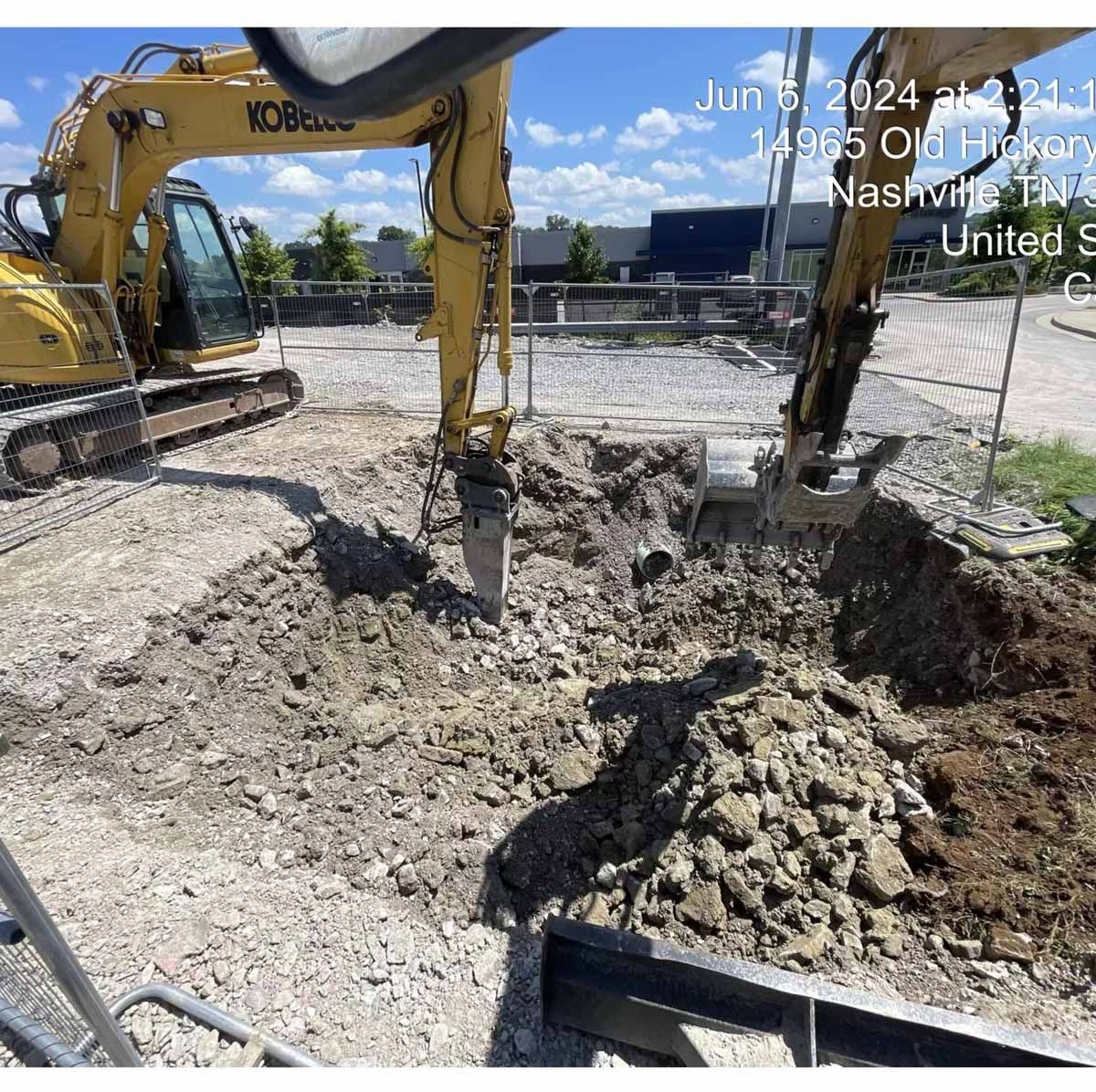
Commercial utility installation requires trenching to depths greater than residential work, often six feet or more for sewer mains and water services, with bedding material and backfill compacted to prevent settlement that cracks joints or creates low spots in parking lots above. Crews coordinate with municipal inspectors who verify pipe materials, joint connections, slope measurements, and separation distances between different utility types before allowing backfill.
Schedule a utility planning consultation to review service sizes, routing options, and tie-in locations for your commercial site.
What Proper Utility Installation Requires
Water line installation involves trenching to depths below frost line, placing pipe on compacted bedding material, and installing thrust blocks at directional changes to prevent pipe movement under pressure. Sewer lines require precise slope—typically a quarter-inch per foot minimum—verified with lasers throughout installation to maintain gravity flow without creating sags where solids accumulate. Underground electrical work involves pulling conduit through trenches at code-required depths, maintaining separation from water and sewer lines, and installing pull boxes at intervals that allow wire replacement without excavating the entire run.
Once installation completes and inspections pass, water flows at consistent pressure to all fixtures without the drops that indicate undersized lines, sewer systems move waste without backups or slow drains, and electrical service reaches building panels and exterior equipment without voltage loss. Proper backfill compaction prevents pavement settlement above utility trenches, eliminating the cracking and sinking that appear months later when trenches weren't compacted in lifts.
Testing occurs before backfilling: water lines undergo pressure tests that hold specific PSI for set durations to verify joint integrity, sewer lines receive mandrel tests or camera inspections to confirm proper slope and detect any defects, and electrical conduit gets inspected for proper depth and protection. As-built documentation records final utility locations, providing property owners with accurate maps for future maintenance or expansion work.
Answers to Frequent Utility Questions
Commercial utility systems involve coordination with multiple agencies and trades, with specific concerns about testing, material selection, and how installations affect project timelines and long-term property access.
What determines water line sizing for commercial properties?
Line size depends on fixture count, simultaneous demand calculations, available municipal supply pressure, and fire suppression requirements if sprinklers are installed. Undersized lines cause pressure drops during peak use, while oversized lines increase material costs without functional benefit.
How deep must sewer lines be installed in Nashville?
Depth depends on where the line ties into municipal mains, the building's floor elevation, and maintaining minimum slope throughout the run. Lines often run five to eight feet deep to achieve gravity flow and connect to city infrastructure at required elevations.
Why does underground electrical require conduit rather than direct burial cable?
Conduit protects wiring from physical damage, allows wire replacement without excavation, and meets commercial code requirements for circuit protection and future modifications. Conduit must be installed at depths that prevent damage from surface loads while remaining accessible for pulling new conductors.
What happens during utility tie-ins to municipal systems?
Tie-ins require coordination with city utility departments, often involving scheduled shutdowns of existing mains, inspections of connection methods, and testing before the new service goes live. Timing depends on municipal schedules and inspector availability, which affects overall project timelines.
How are utilities located and marked before excavation?
Before any digging begins, crews request utility locates through Tennessee's one-call system, which triggers marking of existing underground lines. Locates show approximate locations, and crews use caution when excavating near marked areas to prevent damage to active utilities serving surrounding properties.
J Industries TN manages commercial utility installations from initial trenching through final testing and tie-in coordination, handling water, sewer, and underground electrical systems. Request a detailed estimate based on site plans and connection requirements for your commercial development.