

Earthwork That Establishes Proper Site Function
Commercial Grading in Nashville for properties requiring engineered drainage patterns and building pad preparation
Nashville's terrain varies from flat urban parcels to sloped sites along ridgelines, and commercial grading must account for those differences while meeting stormwater regulations that have tightened significantly over the past decade. Parking lots, loading docks, and multi-building complexes generate runoff volumes that overwhelm inadequately graded sites, creating flooding, erosion channels, and pooling that damages pavement and foundations. J Industries TN performs commercial grading across Nashville, shaping sites so water flows predictably toward collection points rather than creating problems during the intense summer thunderstorms common to Middle Tennessee.
The work involves moving earth to match elevations shown on civil engineering plans, compacting fill material to densities verified by geotechnical testing, and creating slopes that balance drainage requirements with accessibility standards. GPS-guided equipment allows operators to follow digital terrain models in real time, cutting high areas and filling low spots to within hundredths of a foot rather than relying on string lines and manual measurements.
Arrange an on-site evaluation to review topography, drainage objectives, and how grading integrates with planned utilities and paving.
How Grading Shapes Long-Term Site Performance
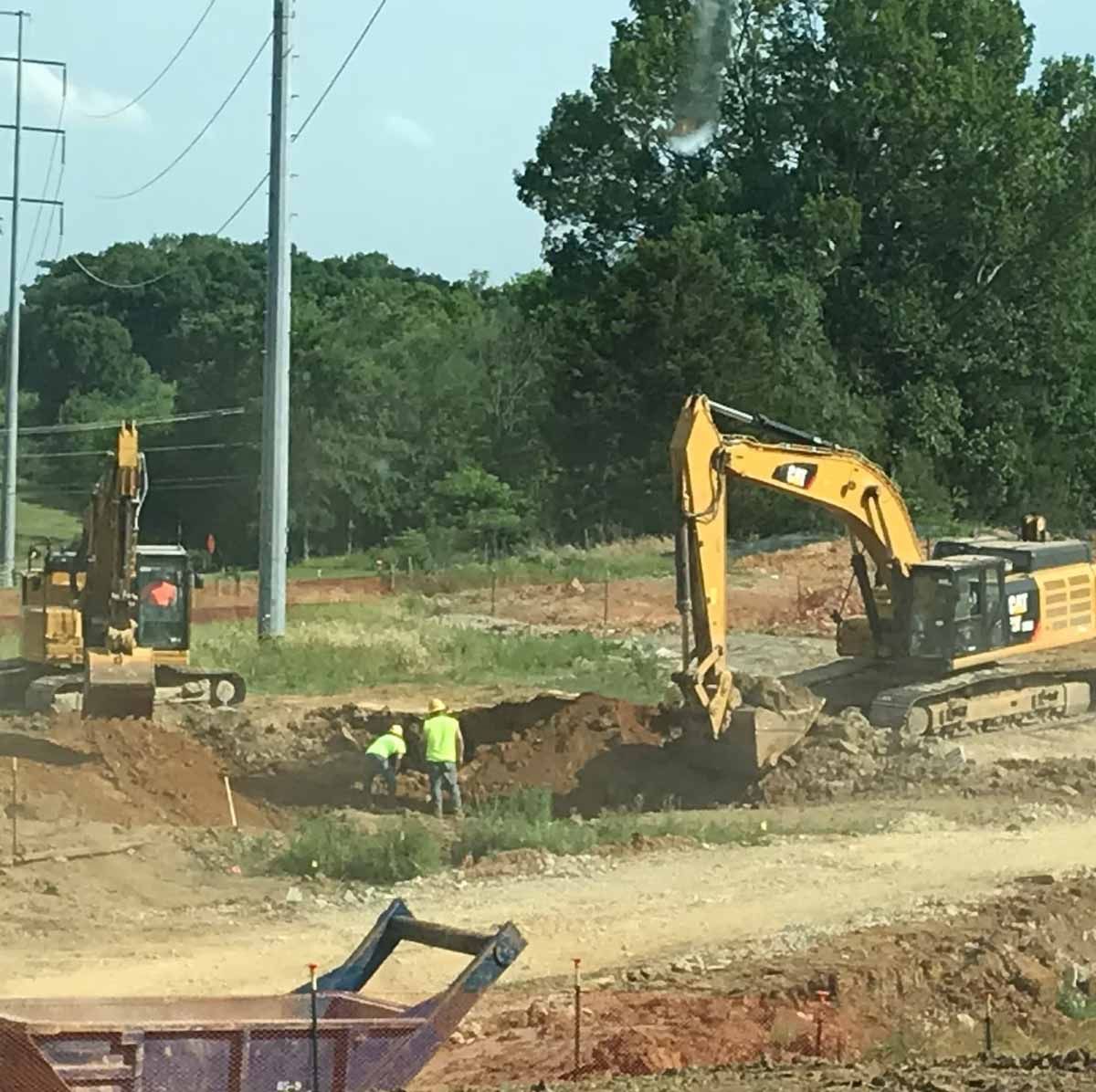
Commercial grading begins with stripping topsoil and organic material that would compress unevenly under building loads or pavement, stockpiling that material for later use in landscaped areas. Cuts and fills follow engineered cross-sections, with compaction occurring in lifts—layers of soil compacted incrementally rather than in deep, loose piles that settle over time. Testing occurs at intervals specified by project engineers, measuring soil density to confirm it meets percentages required to support structures and prevent pavement cracking.
After grading reaches final elevations, stormwater flows along predictable paths during rain events, moving toward catch basins and detention areas rather than ponding near building entrances or eroding soil along property edges. Parking lot slopes guide water to collection points without creating grades too steep for accessible parking spaces or safe vehicle movement. Building pads sit at elevations that keep foundations above flood zones while maintaining reasonable transitions to surrounding pavement and drives.
The process includes establishing subgrade elevations that account for pavement thickness, utility trench locations, and future landscaping. Crews coordinate with surveyors who verify elevations before concrete or asphalt installation begins, catching any deviations while corrections remain straightforward. Erosion control measures go in place as grading progresses, preventing sediment from leaving the site during construction and avoiding violations of stormwater permits.
Common Grading Questions from Property Owners
Commercial grading involves technical requirements and coordination challenges that differ from residential lot work, raising questions about testing, timelines, and how earthwork affects other construction phases.
What does compaction testing measure and why does it matter?
Compaction testing measures soil density as a percentage of maximum achievable density for that soil type, with commercial projects typically requiring 95% compaction or higher. Proper compaction prevents settlement that causes pavement cracking, foundation shifting, and utility line breaks years after construction.
How does Nashville's clay soil affect commercial grading?
Middle Tennessee clay shrinks and swells with moisture changes, which means grading plans must account for soil behavior by specifying proper compaction moisture levels and sometimes requiring over-excavation and replacement with engineered fill in areas supporting heavy loads or sensitive structures.
When can grading proceed during wet weather?
Grading stops when soil reaches moisture content that prevents proper compaction, typically during prolonged rain periods or when clay becomes plastic and unworkable. Attempting to grade saturated soil creates compaction problems that cause failures later, so weather delays are common during Nashville's wet winter and spring months.
What happens if elevations don't match engineering plans?
Surveyors verify elevations at key points throughout the grading process, and any deviations trigger corrections before work proceeds. Incorrect building pad elevations affect foundation design, while drainage slope errors cause stormwater problems that require expensive rework after paving.
How long does commercial grading take for a typical project?
Timelines depend on site size, soil conditions, weather, and the amount of material being moved, but grading generally represents one of the first construction phases and must finish before utilities, paving, and building construction can proceed. Coordination with other trades and inspector availability affect scheduling as much as earthwork itself.
J Industries TN handles commercial grading with GPS-equipped machinery and crews experienced in meeting compaction specifications and drainage requirements. Contact our team to discuss site elevations, soil conditions, and grading timelines for your commercial property development.