

Fire Protection Systems Built Into Property Infrastructure
Underground Fire Water in Middle Tennessee for commercial properties requiring code-compliant fire protection infrastructure
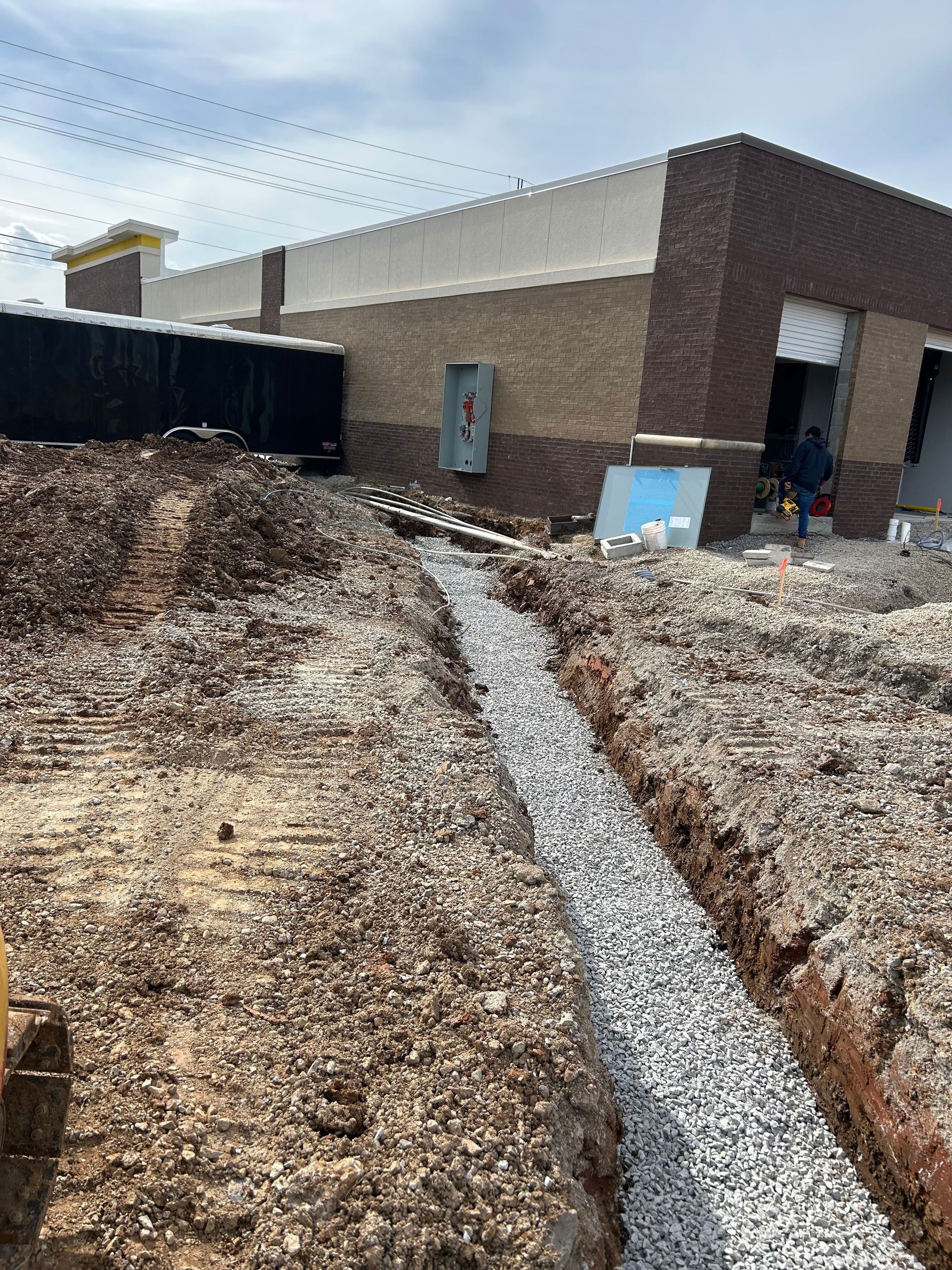
J Industries TN handles underground fire water installations in Middle Tennessee, serving commercial properties where fire suppression systems need dedicated water supply lines buried beneath parking lots, driveways, and landscaping. You notice this work when fire sprinkler systems require independent water sources sized to deliver specific flow rates and pressures that standard building supply lines cannot provide. The installation involves excavating trenches, laying pressure-rated pipe, installing isolation valves and backflow preventers, then backfilling and restoring surfaces to code.
This service addresses the regulatory requirement that fire sprinkler systems receive water through separate underground lines connected directly to municipal water mains or dedicated fire water storage tanks. Tennessee fire code mandates that licensed contractors perform this work, requiring a fire sprinkler license to design, install, and certify underground fire water systems that feed building sprinkler networks.
Request an on-site evaluation to determine underground routing requirements and municipal connection points for your property.
What Proper Underground Fire Water Installation Requires
The process begins with determining pipe sizing based on sprinkler system hydraulic calculations, which specify minimum flow rates measured in gallons per minute and residual pressures needed at the system riser. Your contractor coordinates utility locates, obtains municipal tap permits, excavates trenches to frost-line depth, then installs ductile iron or CPVC pipe rated for fire service pressures that often exceed 150 psi during pump operation.
Once the system is installed and pressure-tested, you see underground lines that remain invisible beneath restored pavement and landscape, with only valve boxes and fire department connections visible at grade level. The work includes installing thrust blocks at directional changes to prevent pipe movement under pressure surges, placing tracer wire for future locating, and documenting as-built drawings that show exact pipe depths and valve locations.
The installation also involves coordinating with the local water authority for meter installation, backflow preventer testing, and final inspection sign-off before the fire marshal approves the building's sprinkler system for occupancy. Licensing requirements exist specifically because improper installation creates life-safety failures during actual fire events when water supply must perform exactly as designed.
Questions Property Managers Ask About This Work
Commercial properties installing fire suppression infrastructure often need clarity on underground water supply requirements before construction proceeds.
What determines the size of underground fire water pipe needed for a building?
Hydraulic calculations performed by the fire sprinkler designer specify minimum pipe diameter based on the total number of sprinkler heads, building height, and required flow duration, typically resulting in pipe sizes ranging from four inches to eight inches for most commercial structures.
How does the contractor verify that underground lines will deliver adequate pressure during a fire?
Pressure testing involves filling the installed pipe with water and holding 200 psi for two hours while monitoring gauges for any pressure drop that would indicate leaks at joints or fittings before the system is buried and backfilled.
Why does Tennessee require a fire sprinkler license specifically for this work?
The state mandates this credential because underground fire water systems are life-safety components where installation errors directly affect whether sprinklers will function during actual fire emergencies, making specialized training and accountability essential.
What happens if existing underground utilities conflict with planned fire water routing?
The contractor works with utility companies and the design engineer to reroute pipe paths around existing gas lines, sanitary sewers, electrical conduits, and storm drains while maintaining code-required separation distances and proper slope for drainage.
How long does underground fire water installation typically delay overall construction schedules in Middle Tennessee?
Installation duration depends on linear footage, soil conditions, utility conflicts, and municipal inspection availability, with coordination often scheduled early in site development to avoid conflicts with building foundation work and paving operations.
J Industries TN provides underground fire water installation for commercial properties where code-compliant fire protection infrastructure requires licensed expertise and coordination with local water authorities. Schedule a consultation to review site-specific routing and municipal connection requirements for your project.