

Fire Suppression Lines Built to Code
Commercial Underground Fire Water in Nashville for businesses installing sprinkler systems requiring licensed underground supply installations
Fire sprinkler systems depend entirely on underground water supply lines delivering adequate pressure and volume when activation occurs, which means those lines must be sized correctly, installed at proper depths, and tested to verify performance before buildings receive occupancy permits. A licensed underground fire water installation follows engineering specifications that account for sprinkler head count, building height, fire code classifications, and available municipal water pressure. J Industries TN provides licensed commercial underground fire water services in Nashville, installing supply lines from meter connections or fire hydrant taps to building entry points, pressure-testing systems to confirm they meet fire marshal requirements, and coordinating inspections with local authorities before backfilling.
The work differs significantly from standard water line installation because fire codes mandate specific pipe materials, joint types, depth requirements, and testing protocols that don't apply to domestic water services. Crews must understand NFPA standards, maintain certifications for working on fire suppression infrastructure, and document installations with detailed records that remain with the property throughout the building's life.
Schedule a project consultation to discuss fire water supply requirements and coordination with your sprinkler system design.
What Licensed Fire Water Installation Involves
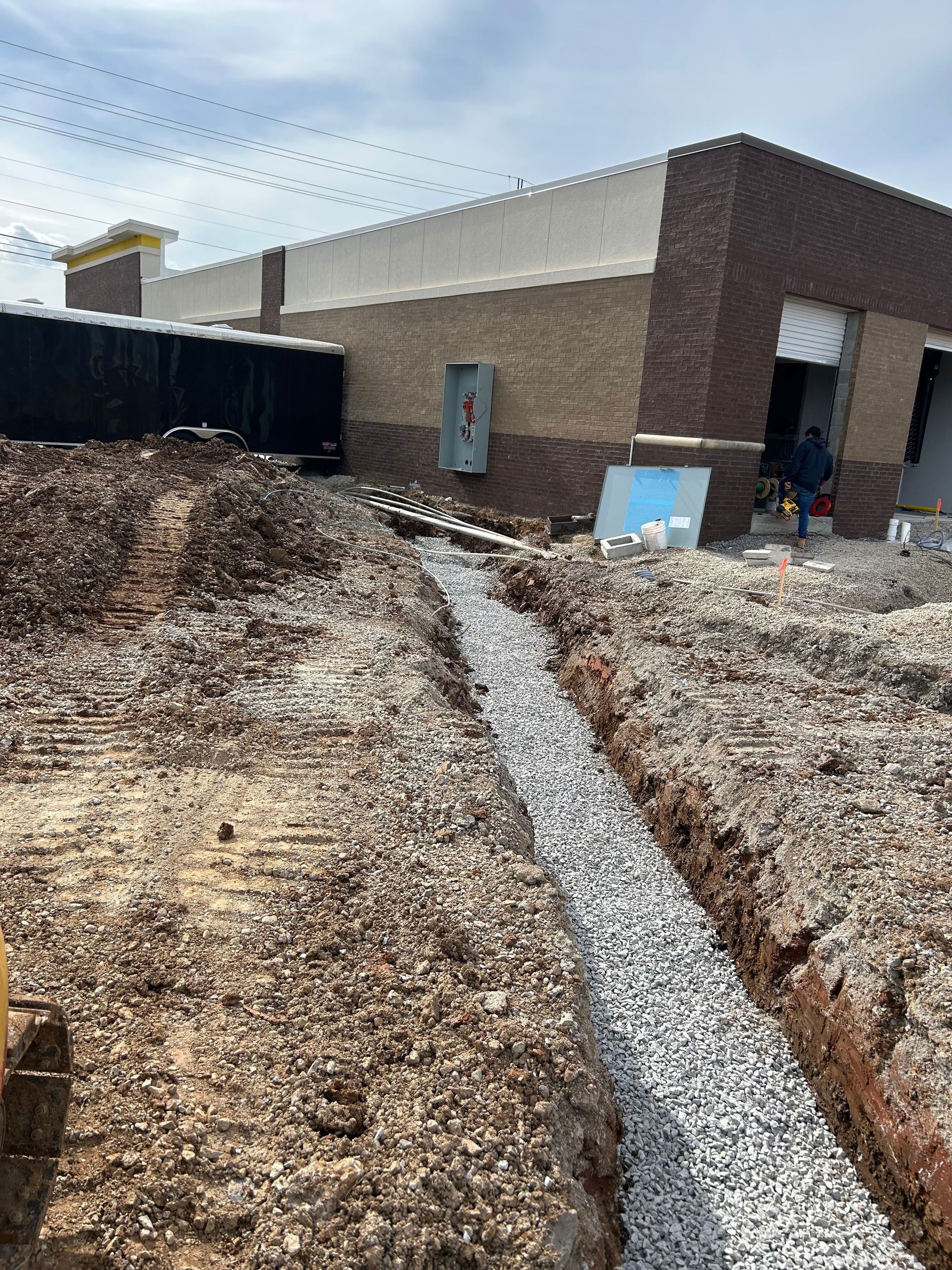
Underground fire water lines run from municipal connections to fire department connections on building exteriors, sized to deliver flow rates calculated by fire protection engineers based on building use and sprinkler system design. Installation requires trenching to code-specified depths that protect pipes from freezing and surface damage, placing pipe on bedding material that prevents joint stress, and installing thrust restraints at fittings to handle pressure surges when sprinkler valves open. Backflow preventers and isolation valves go in locations that allow testing and maintenance without shutting down entire systems.
After installation, pressure testing verifies that joints hold under sustained pressure significantly higher than normal operating levels, confirming the system will perform during emergencies rather than failing when needed most. Testing involves filling lines with water, pressurizing to specified PSI, and monitoring for pressure drops over set time periods—any loss indicates leaks that must be located and repaired before inspection approval. Licensed installers provide documentation showing test results, materials used, and as-built locations that fire marshals and insurance companies require for code compliance and risk assessment.
Coordination with sprinkler contractors ensures that underground supply lines deliver water at the pressure and flow rate the interior system needs, accounting for elevation changes, pipe friction losses, and simultaneous sprinkler head operation during fire events. J Industries TN works from fire protection engineering plans that specify pipe sizes, routing, connection points, and testing requirements, ensuring installations meet both local fire codes and insurance underwriter standards.
Questions Before Installing Fire Water Lines
Licensed fire water installation involves strict regulatory requirements and coordination with multiple agencies, raising specific questions about testing, materials, and how underground work integrates with building fire suppression systems.
Why does fire water installation require licensing?
Fire suppression systems protect life safety, and improperly installed underground supply lines can fail during emergencies, rendering sprinkler systems useless. Licensing ensures installers understand NFPA codes, proper testing procedures, and documentation requirements that fire marshals enforce.
What pressure and flow rates must fire water lines deliver?
Requirements depend on building size, occupancy type, and sprinkler system design, but commercial systems often require flow rates of hundreds of gallons per minute at minimum residual pressures specified by fire protection engineers. Undersized lines or incorrect routing prevents systems from delivering adequate water when multiple sprinkler heads activate.
How deep must underground fire water lines be installed in Nashville?
Depth requirements follow fire codes and local amendments, typically placing lines below frost depth and at elevations that protect them from traffic loads while maintaining access for future repairs. Specific depth depends on pipe size, location relative to buildings and roadways, and engineer specifications.
What happens during fire water line pressure testing?
Lines are filled, purged of air, and pressurized to test levels typically 50 PSI or more above operating pressure, then monitored for a specified duration to detect leaks. Pressure loss beyond allowable limits requires crews to locate and repair leaks, then retest until the system passes before backfilling can proceed.
How are fire water systems inspected and documented?
Installations require coordination with fire marshals who inspect materials, installation methods, and test results before approving systems for service. As-built drawings show final pipe locations, sizes, valve positions, and connection points, providing permanent records required for building occupancy and insurance coverage.
J Industries TN holds licensing for commercial underground fire water installation, handling systems from municipal connections through final testing and fire marshal approval. Request detailed information about fire water requirements and installation coordination for your Nashville commercial property.