

Drainage That Prevents Recurring Landscape Saturation
Modified French Drains in Nashville for properties experiencing standing water, erosion channels, and foundation moisture issues
Standing water that lingers for days after rainfall, soil erosion along slopes, and damp crawlspaces all point to inadequate subsurface drainage that surface grading alone cannot fix. J Industries TN installs modified French drains in Nashville that combine perforated pipe, graded aggregate, and strategic outlet placement to intercept groundwater before it saturates foundations or floods low-lying landscape areas. The system pulls water from saturated soil zones and conveys it to daylight outlets, storm drains, or designated discharge areas where it can disperse without causing additional problems.
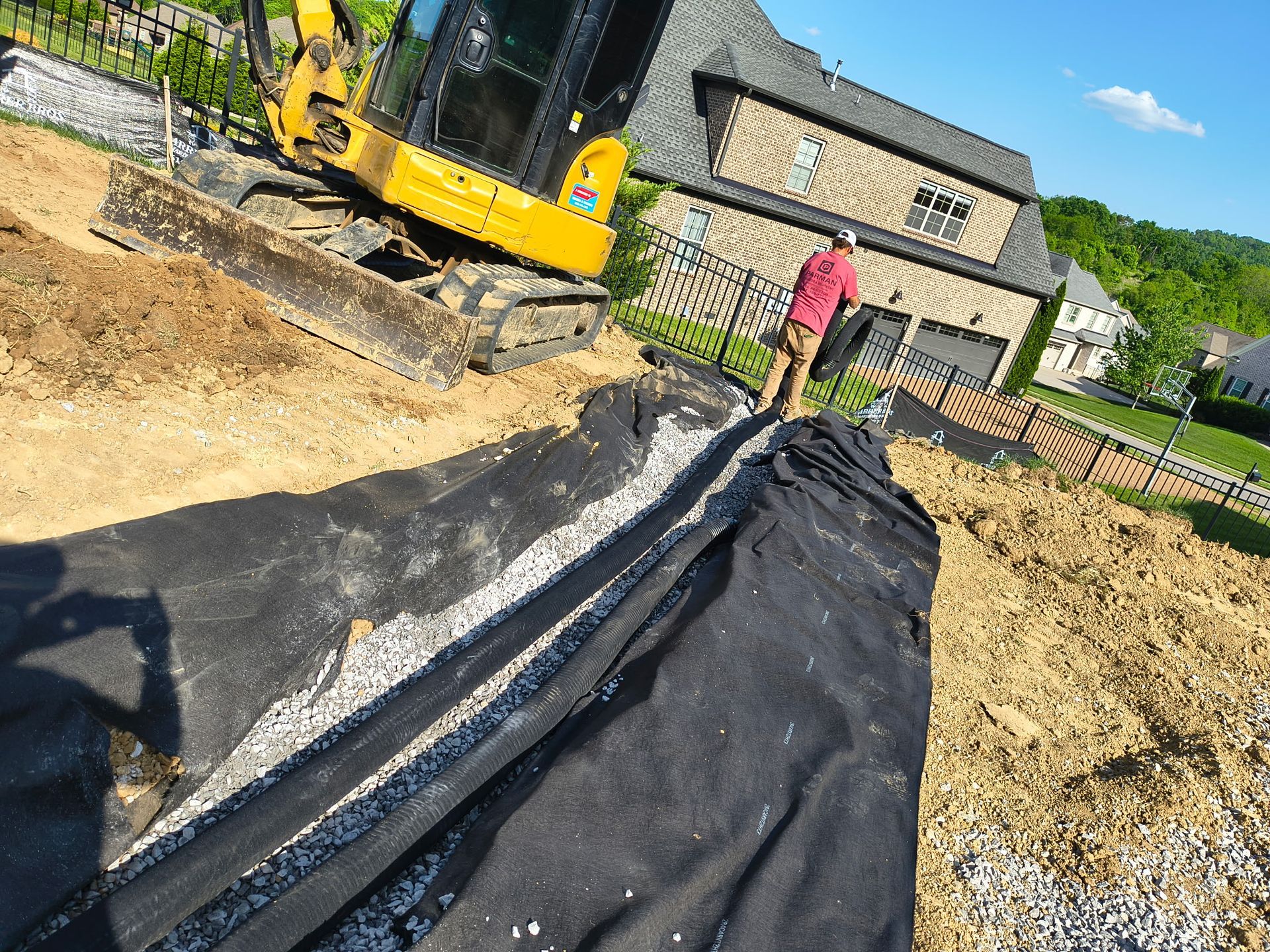
A modified French drain differs from a basic trench-and-pipe installation by incorporating filter fabric, multiple aggregate sizes, and adjustable depth to match the water table and soil permeability conditions specific to Middle Tennessee clay and limestone substrates. The trench is excavated to intercept the water source, lined with non-woven geotextile to prevent soil intrusion, and backfilled with washed gravel around slotted pipe that slopes continuously toward the outlet.
Arrange an on-site evaluation to identify water sources, soil drainage rates, and optimal trench routing for your property.
How Modified French Drains Address Persistent Water Problems
The installation process begins with trench excavation along the path where water naturally flows or accumulates, typically at depths between eighteen and thirty-six inches depending on the water table and desired interception point. Pipe is laid with perforations facing down to pull water from the saturated zone beneath the trench, and clean aggregate surrounds the pipe to create a high-permeability channel that collects water faster than the surrounding soil can absorb it. Filter fabric wraps the aggregate column to prevent clay and silt from clogging the stone voids over time.
After installation, areas that previously stayed muddy for days following storms dry out within hours, erosion gullies stop expanding because water no longer concentrates in surface channels, and basements or crawlspaces show reduced humidity and moisture staining. You may notice that landscape plantings establish more successfully in areas that previously drowned during wet seasons, and foot traffic or vehicle access becomes possible in zones that were formerly unusable after rain events.
The system requires a functional outlet where collected water can discharge without creating new drainage problems downstream. Outlet options include existing storm drains, dry wells in permeable soil areas, daylighting onto stable slopes, or connection to bio ponds or rain gardens designed to handle concentrated flow. Poorly planned outlets that discharge onto neighboring properties, unstable slopes, or areas with inadequate absorption capacity can create liability and erosion issues that undermine the entire system.
Answers to Frequent Drainage Questions
Homeowners in Nashville considering subsurface drainage often ask about longevity, maintenance requirements, and how the system handles local soil conditions.
What causes French drains to fail over time?
Silt intrusion through inadequate or degraded filter fabric clogs the aggregate voids and pipe perforations, reducing flow capacity until water can no longer enter the system. Using non-woven geotextile rated for soil separation and wrapping the entire aggregate column prevents most premature failures.
How deep should the trench be for effective water interception?
Depth depends on where the water table sits during wet periods and how deep the saturated soil zone extends. Most residential installations in Nashville range from twenty-four to thirty-six inches to intercept groundwater moving through clay layers without encountering bedrock or excessive excavation cost.
Why does pipe slope matter in a French drain system?
Slope ensures that water captured by the system moves toward the outlet rather than sitting stagnant in low sections of the pipe. A minimum slope of one percent—approximately one inch of drop per eight feet of pipe length—maintains flow velocity and prevents sediment accumulation inside the pipe.
What maintenance does a modified French drain require?
Surface inlets or catch basins connecting to the system need periodic debris removal, and outlet areas should be inspected to ensure water discharges freely without erosion or blockage. The subsurface components typically require no maintenance if filter fabric and aggregate installation were done correctly.
How do Nashville's clay soils affect French drain performance?
Clay drains slowly, so French drains in clay-heavy areas work by creating a preferential flow path through aggregate rather than relying on soil absorption. The system collects water faster than surrounding clay can, channeling it to an outlet instead of waiting for slow percolation through dense soil.
J Industries TN maps drainage patterns, evaluates soil composition, and designs outlet strategies before trenching begins. Contact the team to review site-specific water issues and receive a detailed installation plan based on your property's topography and existing drainage infrastructure.